











From catastrophe to comeback: LA legal market looks to build back stronger
From the pandemic and Hollywood strikes to trade wars and devastating fires, the last several years have been a rollercoaster of setbacks and recoveries for the LA legal market. Law firm leaders and their clients gathered in Century City, LA for Sandpiper Partners’ 16th Annual Los Angeles Legal Market conference to discuss how to manage uncertainty and position their firms for success.
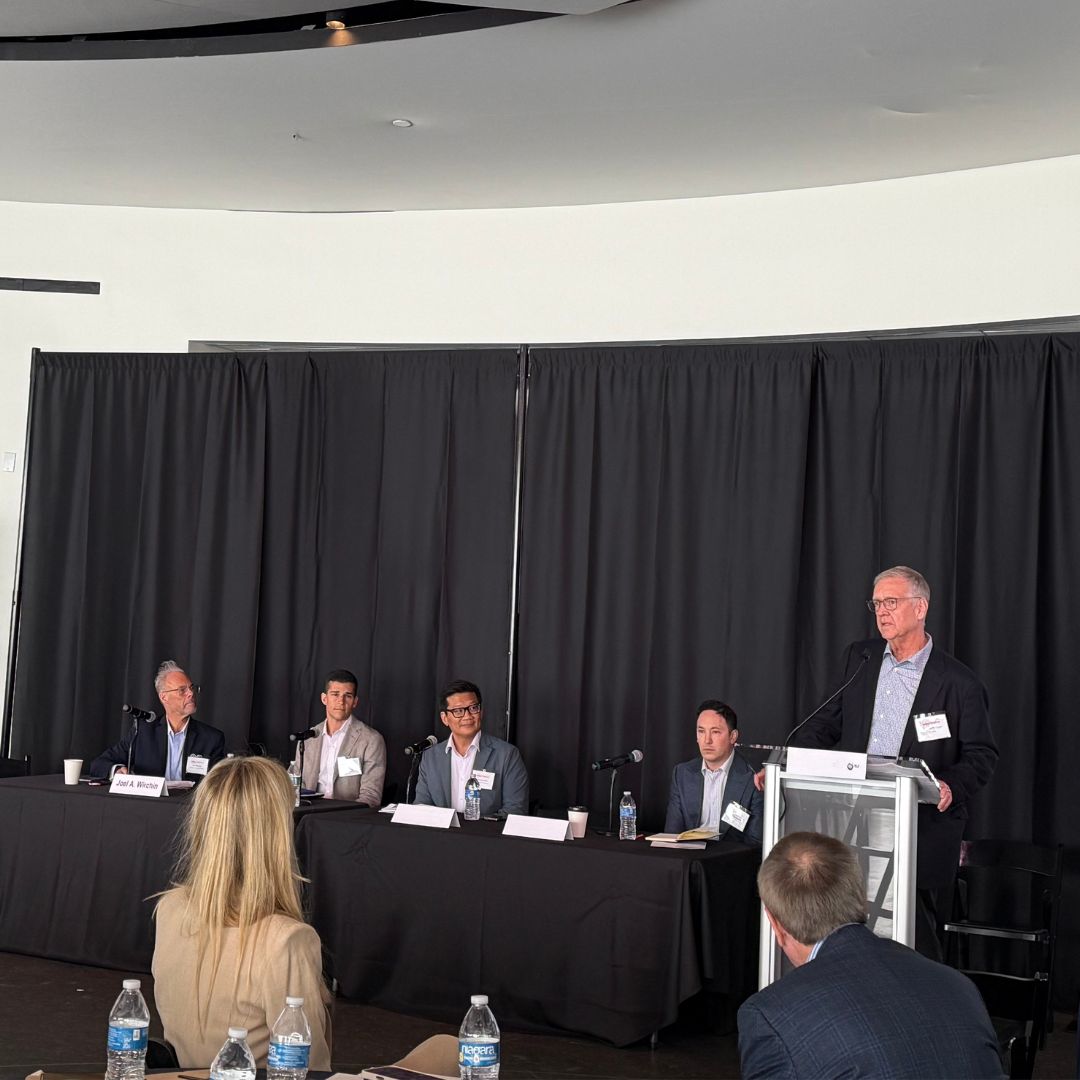
Williams Lea by RRD’s Senior Strategy Director, Joel Wirchin, joined an impressive panel to offer views on the West Coast approach to managing the pace of change, staying ahead in the war for talent, finding the right office location, and planning for, and implementing Generative Artificial Intelligence (GenAI).
Here are the key takeaways from the event:
Resilience in the face of uncertainty
While economic uncertainty is undoubtedly influencing client demand and slowing strategic investments, the law firm leaders on the panel expressed optimism. “Economic uncertainty is nothing new here in LA…and despite it all our firms have continued to thrive,” said one senior law firm leader. “We set a high bar for 2025 because of the great results we had in 2024 and although now we are guarding for a recession, so far, we are not seeing that yet.” The diverse client sectors in the LA market, including entertainment, tech, healthcare and real estate, help the LA market maintain strength and guard against one challenged market or practice hampering profitability.
Despite this balanced practice/sector focus, the law firm leaders and client panelists provided perspective on the entertainment market, painting a picture of a contracting industry, battered by one crisis after another. “We’ve been struggling since 2020,” said one panelist. “First COVID, then the strikes, then the fires…and now more and more work leaving LA, even leaving the US.” There was a sense that the global sporting events LA will host in upcoming years, such as the FIFA World Cup, Super Bowl, and Summer Olympics, will provide a much-needed boost to the entertainment market.
Geopolitical tensions also weigh heavily on law firm leaders’ minds. Investment from Asia, which used to play a much larger role in the LA market, has slowed due mostly to tensions with China. Although, one panelist did point out: “With the dollar weakening, LA firms are seeing more investment interest from European firms, so we might see a pick-up in cross-border transaction s coming from the West.”
Hot or not? The LA lateral market
Despite some views that the LA lateral market is “crazy,” actual data shows a different trend. According to several panelists responsible for lateral recruiting, the greater LA lateral market has been “shockingly consistent,” with the number of lateral moves in 2021 through 2024 largely the same. However, early 2025 results show lateral moves slowing, with a 14% drop in the number of lateral moves for the first six months of this year compared to the same period in 2024.
With market challenges impacting lateral moves, the law firm panelists discussed their firm’s priorities around lateral hiring. One panelist explained: “The focus right now is on shoring up regulatory practices, but firms should also think strategically and take a proactive approach to shore up their transactional practice.” Lateral hires are also a lever that firms can use to differentiate themselves. “Let client needs and relationships be your guide,” added one panelist. “Go after the talent that can help build your roster and deliver stronger client relationships.”
The panelists all agreed that while economics are important in lateral hiring, determining cultural fit is equally important and more challenging. This has led to a very complex lateral hiring process, where candidates must meet, on average, with more than 20 partners.
Location, location, location: LA Real estate and office configuration remain top of mind
In California, where, as one panelist describes “people drive to their mailboxes,” firm location and office configuration remain both a key challenge and a key differentiator. Several panelists described their firm’s exodus from downtown Los Angeles, due largely to safety concerns, transportation challenges (pre and post fires), and client proximity and their “flight to quality” moves to new and expanded offices in places like Century City or Santa Monica.
What are firms looking for in their new or improved office space? Several described the importance of upgraded amenities and collaboration space. As one panelist said: “We designed our offices to align to the ‘more we space and less me space’ philosophy.” With amenities such as high-end art, a waterwall and onsite barista, LA firms are truly leaning into the office as a collaborative, culture builder.
From no way to okay: Clients are changing their directives on law firm AI use
Less than a year ago, most firms were reporting that their clients were restricting use of data related to their matters in any large language models. Fast forward to today and firms are not only encouraging their lawyers to use AI for speed and efficiency; some even encourage their law firms to advise on which tools they should use. With clients adopting AI use in their corporate law departments at a faster pace than the firms, there is growing pressure on law firms to increase their AI use.
Joel Wirchin, Williams Lea’s Senior Strategy Director, posited that AI should not merely be seen as a trend but as a practical tool for improving operational efficiency and profitability within firms. He elaborated: “AI is only as smart as the people who help operate it. So, the concept of humans in the loop is really everything. And while we may think we are at the world of AI 101, I think we are now at graduate school level of AI 201, or beyond.” Joel provided real world examples of AI-enabled solutions such as Williams Lea’s Deckorate and Intake.AI that that are actively helping support teams more productive. “Products like this point to a way in which AI is not just a thing, but actually a part of the organic life of the firm and the operation of the firm and a driver in the firm’s success,” he added.
AI governance, choosing the right tech tools for the right use cases and driving adoption across the firm, were key topics of debate. The panelists shared their firm’s approaches to crafting AI policies, most of which have evolved from brief statements to comprehensive documents addressing various operational concerns.
Choosing the “what, when and how” to implement AI tools remains a key priority. Many of the panelists said their firm had an AI committee and/or an innovation team as well as a test space or innovation lab to see thoroughly evaluate AI tools. They stressed the importance of getting partners, associates and even paralegals involved at the pilot/decision stage of AI tech evaluation, to help drive successful adoption after the products are selected.
Attorney training is seen as imperative for successful AI adoption, with several panelists sharing that their firms had evangelists and cohorts of AI enthusiasts helping to drive awareness of the benefits of the new capabilities. One panelist offered his firm’s hands-on approach: “We’ve established AI office hours… we say, bring us your case, bring us your situation and let’s figure out a way that the AI tools that we have can support what you’re doing.” They added, “Then that knowledge from those sessions is often generalizable in a way that it can accrue to the benefit of other people on other teams doing similar tasks.” Another panelist’s firm takes incentivizing AI learning even further. “We offer innovation credits… where up to 50 hours spent on AI training and development is bonus eligible.”
As firms navigate the deep waters of market uncertainty, changing market and client demands and technological transformation, understanding client needs, developing robust AI policies, and fostering a culture of innovation will be critical for success. To learn more about how law firm leaders are shoring up their operations infrastructures to support the evolving legal landscape, download our 2025 Trends and Opportunities in Business Services, The technology revolution in legal support: Redefining roles and enhancing value in modern law operations.


The Think Space

Global law firm leaders are confronting a strategic revolution built on AI and human connection
7 Min Read
The admin support blind spot: Why private equity’s growth hinges on tech-enabled outsourcing
4 Min Read