Nov 19, 2025
Three law firm non-negotiables in the age of disruption
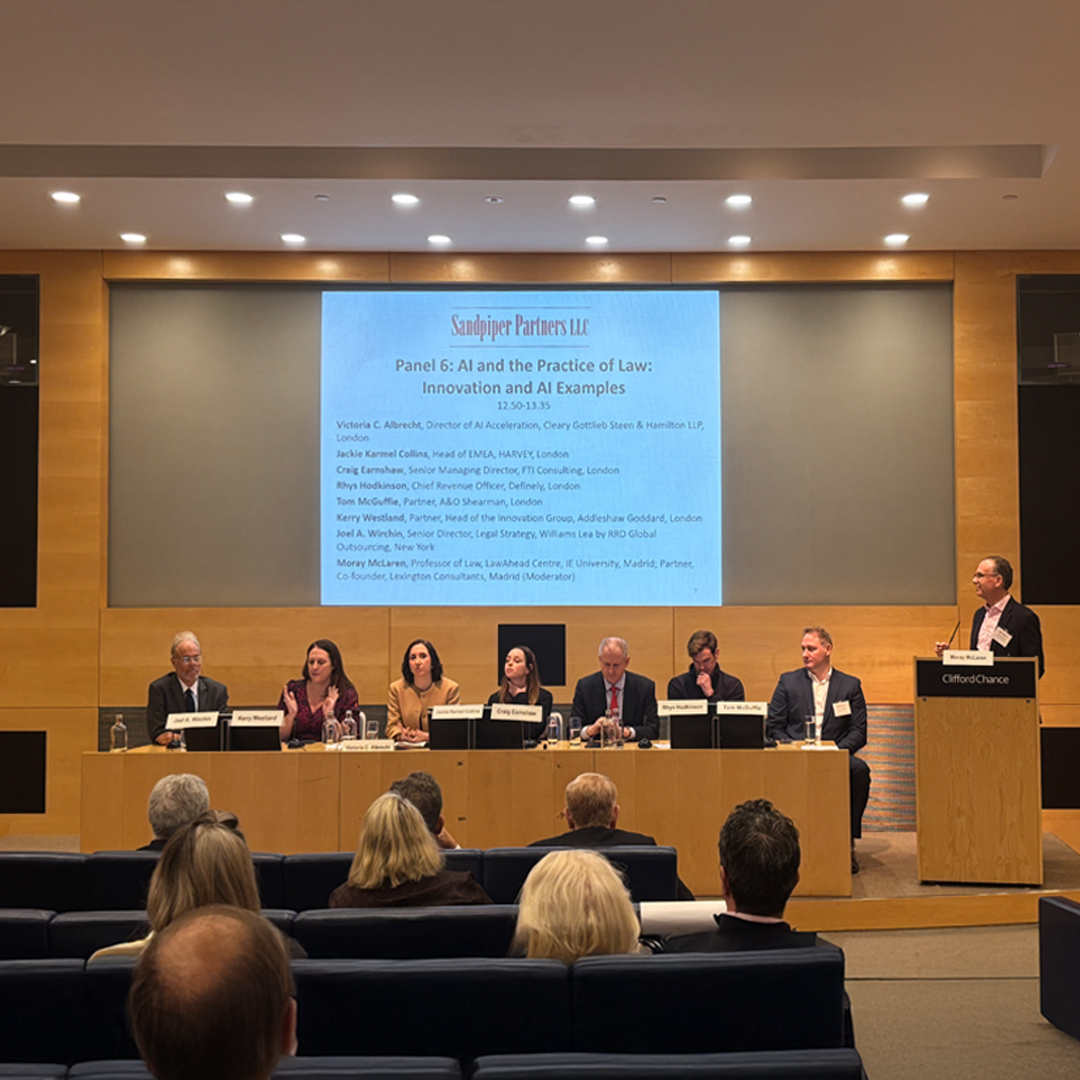
The recent Atlanta Legal Market Roundtable, organized by Sandpiper Partners, brought together corporate general counsels, law firm managing partners, legal ops leaders, and legal service providers to have candid, unvarnished conversations about the future of legal services.
What emerged wasn’t just a discussion about rates or technology. It was a frank examination of what separates the firms that will thrive from those that will struggle in an increasingly competitive, AI-enabled, and client-driven market. Three strategic themes dominated the conversation, and they demand immediate attention from firm leadership.
Partnership over transactions: Building long-term client relationships
The most striking revelation came early in the client-focused panel, when the law firm clients made clear that transactional excellence is merely table stakes. What differentiates firms is their ability to function as true strategic partners.
“We should be in this together,” said a client panelist. “We want long-term relationships with firms and people who partner with us on all kinds of different things. Be more proactive. You guys have offices all over the place. You see things… let us know.”
The implication for law firms is profound: Proactive relationship management cannot be delegated solely to relationship partners. It requires institutional commitment. Law firms must build systems that enable attorneys to track client business developments, industry trends, and regulatory changes, then reach out with potential solutions even before being asked.
Another client panelist crystallized the communications challenge that undermines even strong legal advice. “All of us are very smart in this room, but the way in which you deliver that information is super important.” He described working with an M&A partner whose analysis was excellent but whose emails typically ran two pages. “You lost me in the first sentence.”
The attorneys who excel, he explained, schedule pre-negotiation strategy calls with inside counsel alone, then bring in business teams with everyone aligned. “That’s a lot of work ahead of time, but that builds client confidence in outside counsel. That builds confidence within In-house Counsel.”
For law firm leadership, this means rethinking associate and partner training to emphasize communication architecture, not just legal substance.
AI as a competitive differentiator: From a productivity tool to a client value driver
If strong firm-client partnership defines the relationship, AI reshapes the economics. The roundtable’s AI panel revealed a market in rapid transition, where early adopters are gaining measurable advantages and clients are beginning to demand AI-driven efficiencies.
A client firm’s legal team has fully deployed Harvey AI across its department, viewing it as “Microsoft Excel for lawyers,” a fundamental productivity tool rather than an experimental add-on.
That anecdote should alarm every managing partner. Clients are no longer asking whether firms use AI, they’re starting to require it and expect corresponding fee reductions for work that can be automated.
Yet adoption remains uneven. A partner at an AmLaw 200 firm who leads AI initiatives noted that while “associates embraced the first generation of tools,” many partners remain resistant. Their solution: Demonstrating AI’s impact on business development and pitch wins. “As soon as someone, one of their peers, is going to be making more money than them, they will re-evaluate…whatever it takes to get people invested in the education.”
The strategic imperative is clear: Firms must move beyond training modules to embedded AI workflows. This means investing in dedicated AI teams that create firm-specific tools, establishing protocols for client communication about AI use, and most critically, restructuring pricing models to capture value rather than hours.
The transformation extends beyond law firms themselves. Scott Incognito, Vice President of Client Services at Williams Lea, which provides critical support services to law firms, explained how AI has become essential to their operations. “We realized we had to buy into AI, and we use it in resource utilization, workflow, for our people supporting law firms,” he said. “So, for us, it’s the ability to do higher volume and higher accuracy work for document reviews and admin support.”
Talent and culture in a hybrid world: The apprenticeship crisis
The third theme threaded through every panel: The legal profession faces a talent development crisis that threatens service quality and competitive positioning.
Multiple panelists identified what one law firm panelist called “the lost generation,” associates who graduated around 2018-2019 and entered practice during the pandemic and “never got the muscle memory, the experience of like ‘this stinks, but wow, I’m really learning something here, and we’re creating these bonds.'”
This cohort is now at the senior associate level, “hoping to be junior partners, and they haven’t put in the work, and they haven’t made the commitment,” while newer associates who’ve been told by law schools that “this is not a virtual job” are passing them by.
The hybrid work environment compounds the challenge. While most Atlanta firms have established three-day office minimums, the loss of informal mentorship—late nights closing deals, spontaneous hallway conversations about client strategy—has fundamentally altered skill development.
A client panelist highlighted the practical consequences. “When I’m getting signature pages from a major firm and they’re so screwed up, and I have to spend eight hours flipping through them with my paralegal and fixing them because I can’t send them to my SVP. That’s not okay,” they shared.
For firm leadership, the solution requires rethinking the apprenticeship model entirely. As one panelist put it, “This is an apprenticeship business,” but when partners in their 40s and 50s work remotely because they’re “multitasking during the day with young kids or elderly parents,” they’re not providing those ancillary things like mentorship.
The best partners understand this. “The partners who are going to be the most effective in building that great team that looks good to the client…are the ones who have realized, maybe I don’t need to be there for me, but I need to be there because there’s a really talented associate who wants to work with someone who’s going to show up.”
The convergence point
The roundtable revealed something more fundamental than three discrete challenges: These imperatives are linked. Law firms cannot build true client partnerships without the AI capabilities that demonstrate innovation and deliver cost efficiency. They cannot leverage AI effectively without talent that understands both the technology and the nuanced judgment that clients demand. They also cannot develop that talent without a culture of in-office collaboration and intentional mentorship that hybrid work has disrupted.
The legal market is bifurcating between firms that recognize these interdependencies and act decisively across all three dimensions, and those that treat partnership development, technology adoption, and talent cultivation as separate initiatives managed in silos.
The question facing every law firm C-suite is not whether to address these imperatives, but whether they have the courage to fundamentally restructure their business model before their best clients force the decision. The market has already begun to separate winners from survivors, and the gap is widening faster than most firms realize.
The themes from the Atlanta Legal Market Roundtable reflect broader industry transformation. Download Williams Lea’s Ninth Annual Trends and Opportunities in Business Services Report to discover how leading law firms are fusing human expertise with cutting-edge technology to enhance client services, optimize operations, and future-proof their practices.